
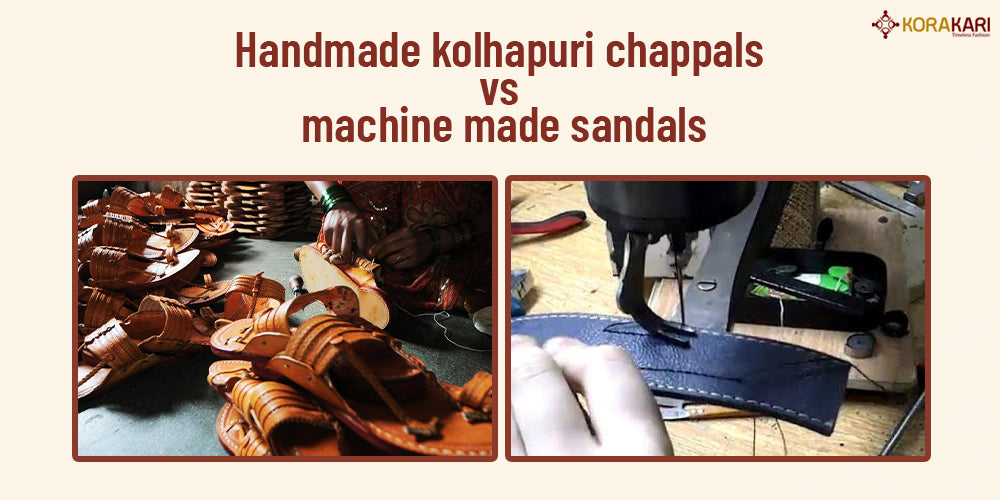
In the world of footwear, few items embody cultural heritage as profoundly as Kolhapuri chappals. These handcrafted leather sandals, originating from Kolhapur in Maharashtra, India, have a history spanning over 800 years. Characterized by their open-toe design, T-strap, braided leather, and vegetable-tanned hide, they represent a pinnacle of artisanal skill. In contrast, modern machine-made sandals—often flip-flops or mass-produced leather/PU alternatives—dominate global markets with their efficiency, affordability, and variety. This article explores the intricacies of both, comparing craftsmanship, materials, comfort, durability, environmental impact, and more, to help you decide which suits your needs.
The Rich Legacy of Kolhapuri Chappals
Kolhapuri chappals trace their roots to the 12th or 13th century, with significant patronage in the 18th century under rulers like King Shahu Maharaj. Initially crafted by local cobblers (often from specific communities), they were designed for practicality: sturdy for farmers, lighter for nobles. The craft spread to neighboring regions in Maharashtra and Karnataka, earning a Geographical Indication (GI) tag in 2019 to protect authentic production.
The hallmark of genuine Kolhapuris is handmade construction. Artisans use buffalo or cow hide, tanned with natural vegetable dyes. No nails or glue—just hand-stitching with waxed thread. The process involves skiving, cutting, braiding, punching, and polishing, taking days or weeks for intricate pairs. Everyday versions can be produced faster, but the labor-intensive nature ensures each pair is unique.
These chappals have transcended regional boundaries, gaining international fame in the 1970s with the hippie movement and recently sparking debates when luxury brands like Prada featured similar designs in 2025 collections.
The Rise of Machine-Made Sandals
Machine-made sandals emerged with industrialization in the 19th and 20th centuries. Innovations like the McKay stitching machine and injection molding revolutionized production. Today, factories use automated cutting, stitching, gluing, and molding to produce thousands of pairs daily.
Common materials include synthetic PU, EVA foam, rubber, or lower-grade leather. Processes like cold-adhesive or injection molding allow for quick assembly. Flip-flops, a popular variant, are often made from EVA in massive quantities.
This method caters to fast fashion, offering trendy designs at low costs.
Craftsmanship and Production Process
Kolhapuri chappals are a labor of love. Skilled artisans, often family-trained, perform every step manually. This preserves tradition but limits output— a single worker might make 8-10 simple pairs daily.
Machine-made sandals prioritize speed and scale. Automated machines ensure uniformity, reducing human error. However, this can lead to less attention to individual quality.
Handmade wins for uniqueness and soul; machine-made for consistency and volume.
Materials and Sustainability
Authentic Kolhapuris use natural leather tanned with vegetable dyes, making them biodegradable and hypoallergenic. No synthetic chemicals mean lower environmental toxicity, though leather sourcing raises ethical concerns.
Machine-made often rely on plastics, PU, and chrome-tanned leather, contributing to pollution and microplastics. Mass production amplifies waste.
Kolhapuris are more eco-friendly in the long run due to durability and natural materials.
Comfort and Fit
Kolhapuris start stiff but mold to the foot over time, offering custom comfort. Breathable and supportive, they promote better circulation and are ideal for warm climates.
Machine-made sandals, especially cushioned ones, provide immediate softness but may lack long-term support, leading to issues like flat feet strain.
After break-in, Kolhapuris often surpass in personalized comfort.
Durability and Longevity
Hand-stitched Kolhapuris last years—even decades—with care. Heavy versions weigh up to 3kg for rugged use; lighter ones endure daily wear for months.
Machine-made vary: cheap ones wear out quickly, while quality brands last longer but rarely match handmade resilience.
Kolhapuris excel in longevity, making them cost-effective over time.
Style and Versatility
Kolhapuris blend ethnic charm with modern appeal—pair with sarees, kurtas, jeans, or dresses. Intricate braids and embellishments add elegance.
Machine-made offer endless trends: sporty, minimalist, ornate.
Both versatile, but Kolhapuris carry cultural depth.
Cost and Accessibility
Kolhapuris range from $8-10 for basic to hundreds for ornate, reflecting labor.
Machine-made are cheaper, often under $20, widely available.
Machine-made win on affordability; Kolhapuris on value.
Cultural and Economic Impact
Buying Kolhapuris supports artisans and preserves heritage. Thousands of families depend on this craft.
Machine production boosts economies through jobs but often in low-wage factories.
Handmade fosters community empowerment.
Health Benefits
Kolhapuris absorb heat, aid circulation, and provide natural support. Some claim acupressure-like benefits.
Cushioned machine-made offer arch support but synthetic materials can cause sweat or allergies.
Natural edge to Kolhapuris.
Conclusion: Choosing Between Tradition and Convenience
Kolhapuri chappals embody timeless craftsmanship, superior durability, personalized comfort, and cultural significance. They are sustainable investments that tell a story. Machine-made sandals provide affordability, variety, and immediate ease, perfect for casual, disposable fashion.
In a fast-paced world, Kolhapuris remind us of slower, meaningful creation. Yet, machine-made meet modern demands. Ultimately, the choice depends on priorities: heritage and quality, or convenience and cost. Many opt for both—Kolhapuris for special occasions, machine-made for daily use. Whichever you choose, footwear reflects more than style—it mirrors values.
Discover more about handcrafted footwear, style tips, and sustainable fashion at https://www.korakari.com/ — where tradition meets modern living.



Leave a comment
This site is protected by hCaptcha and the hCaptcha Privacy Policy and Terms of Service apply.