
In the world of traditional Indian footwear, few items hold as much cultural significance and timeless appeal as Kolhapuri chappals. These open-toed, handcrafted leather sandals, originating from Kolhapur in Maharashtra, have been a staple for centuries. With their distinctive braided straps, sturdy construction, and unparalleled comfort, they blend heritage with everyday functionality. However, their popularity has led to a flood of imitations in the market—cheap knock-offs that mimic the look but lack the soul, durability, and authenticity of the real thing.
As of late 2025, the spotlight on Kolhapuri chappals has intensified, thanks to global attention from luxury brands and a renewed push for artisan empowerment. This makes it more crucial than ever to know how to distinguish genuine handcrafted pairs from fakes. Buying authentic Kolhapuris not only ensures quality and comfort but also supports skilled artisans from marginalized communities who have preserved this craft for generations.
The Legacy of Kolhapuri Chappals
Kolhapuri chappals trace their roots back to the 12th-13th century, encouraged by rulers like King Bijjala and Basavanna in the region that spans modern-day Maharashtra and Karnataka. Traditionally crafted by the Chamar community, these sandals were designed for India's hot climate—breathable, durable, and molding perfectly to the feet over time.
The craft gained prominence in the 20th century under Chhatrapati Shahu Maharaj of Kolhapur, who promoted tanning centers. By the 1970s, they caught global attention during the hippie movement, becoming a symbol of bohemian style.
In 2019, Kolhapuri chappals received a Geographical Indication (GI) tag, restricting the name to products from specific districts: Kolhapur, Sangli, Satara, and Solapur in Maharashtra, and Belagavi (Bagalkot), Dharwad, and Vijayapura (Bijapur) in Karnataka. This tag protects the heritage, ensuring only traditionally made pairs can bear the name "Kolhapuri."
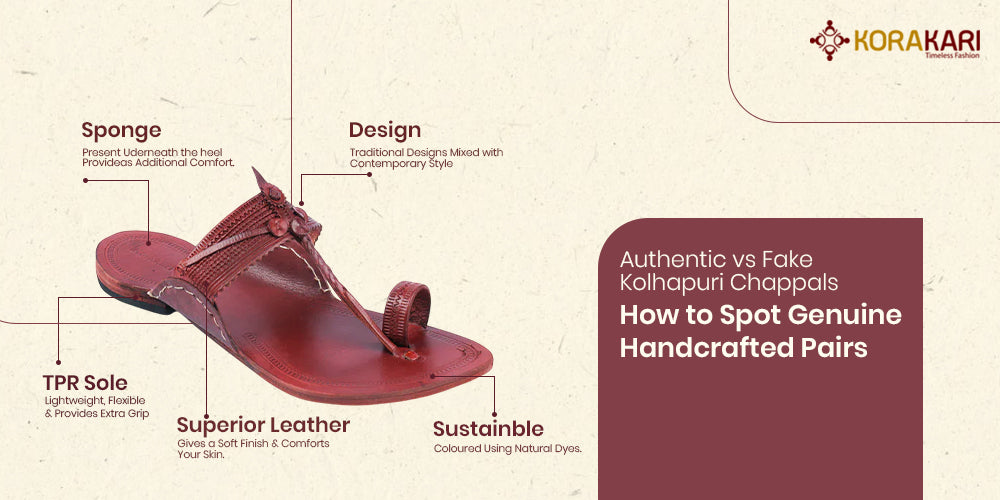
Genuine pairs are vegetable-tanned using natural dyes, hand-cut, braided, and stitched without nails or glue. The process can take days to weeks, involving no machines—pure human skill passed down generations.
Why Authenticity Matters
Fake Kolhapuris flood markets and online platforms, often made with synthetic materials, machine stitching, or glue. They may look similar at first glance but wear out quickly, cause discomfort, and lack the eco-friendly, ethical essence of the originals.
Supporting authentic pairs preserves a dying craft threatened by low wages, imitation competition, and environmental regulations on tanning. In 2025, initiatives like QR code certifications are being introduced to verify authenticity, linking buyers directly to artisans.
Moreover, genuine Kolhapuris age gracefully: they soften, develop a patina, and last years—often 10 months or more with care. Fakes crack, peel, or lose shape rapidly.
Key Differences: Authentic vs Fake
Here's a detailed comparison to help you spot the real deal:
1. Leather Quality and Tanning
- Authentic: Made from pure, vegetable-tanned buffalo or cow leather (ethically sourced). It feels firm initially but softens with wear. Natural earthy smell, matte finish, and visible grain variations.
- Fake: Synthetic or faux leather/PU that's overly soft, shiny, or plastic-like from the start. Chemical smell, uniform texture, no natural imperfections.
2. Craftsmanship and Stitching
- Authentic: Entirely hand-stitched with leather threads. Uneven but strong stitches, no glue marks. Braiding is intricate and varies slightly per pair.
- Fake: Machine-stitched or glued soles. Even, perfect stitches; visible adhesive or nylon threads.
3. Sole and Weight
- Authentic: Thick, layered leather sole that's sturdy yet flexible. Heavier feel, no rubber/plastic base. Molds to feet over time.
- Fake: Thin, lightweight with rubber or plastic soles that bend easily and wear out fast.
4. Design Elements
- Authentic: Classic T-strap with toe loop, side flaps. Traditional styles like Kapashi (intricate braiding), Senapati (broad belts, often with "sound" from walking), or ethnic weaves. Natural colors like tan, brown.
- Fake: Overly symmetrical, mass-produced designs. May add unnecessary embellishments or shiny finishes.
5. GI Tag and Certifications
- Authentic: Often features a GI tag label or hologram. In 2025, look for QR codes linking to artisan details.
- Fake: No tag, or counterfeit labels.
6. Price and Seller
- Authentic: ₹800–₹3,000+ depending on design. Sold by reputable artisans, clusters in Kolhapur, or trusted brands like Korakari.
- Fake: Suspiciously cheap (under ₹500), from generic online sellers or street vendors pushing "Kolhapuri" without provenance.
Step-by-Step Guide to Spotting Genuine Pairs
When shopping—in markets, online, or artisan shops—follow these steps:
- Touch and Feel: Press the leather; genuine is supple yet firm. Bend the chappal—it should resist easily but not snap.
- Smell Test: Natural leather has a mild, earthy aroma. Fakes smell chemical or plastic.
- Inspect Stitching: Run your finger along edges—no glue residue. Stitches should be raw leather cords.
- Check the Sole: Flip it over—pure leather layers, no rubber. Authentic soles show hand-punching marks.
- Look for Imperfections: Handmade means slight variations; perfect symmetry screams machine-made.
- Ask Questions: Reputable sellers know the craft's history, tanning process, and artisan stories.
- Verify Certifications: Scan QR codes if available, or check for GI tags.
Caring for Your Authentic Kolhapuris
To maximize longevity:
- Avoid water; wipe with dry cloth.
- Polish occasionally with natural oils.
- Store in a cool, dry place.
- Let them air out after wear.
With care, they'll become more comfortable over time, developing a unique fit.
Where to Buy Authentic Kolhapuris in 2025
Opt for direct-from-artisan sources:
- Kolhapur markets or clusters
- Trusted online brands: Korakari
- Government-backed platforms via LIDCOM or LIDKAR.
Avoid generic e-commerce listings without verification.
Conclusion: Choose Heritage Over Imitation
In an era where fast fashion dominates, authentic Kolhapuri chappals stand as a testament to slow, sustainable craftsmanship. By choosing genuine pairs, you're investing in comfort, style, and the livelihood of artisans who've kept this 800-year-old tradition alive.
Next time you shop, arm yourself with these tips. Your feet—and the artisans—will thank you. Embrace the real deal: sturdy, soulful, and truly timeless.
Perfect for ethnic wear, casual outings, or fusion styling—grab a pair and support real craftsmanship! Shop here: https://www.korakari.com


Leave a comment
This site is protected by hCaptcha and the hCaptcha Privacy Policy and Terms of Service apply.